Discover Georgia
MS Travel Georgia is a tourism company dedicated to turning travel into a meaningful experience filled with эмоtion, culture, and discovery.
“Feel the diversity of the world with MS Travel” — this is the philosophy that defines every journey we create.
We design unique travel experiences across Georgia, Turkey, and Armenia for those who seek something beyond the ordinary. Our tours include historical and ethnographic, mountain and ski, moto, and combined experiences — tailored for individuals, groups, and family trips.
MS Travel Georgia provides a full range of services, including comfortable transfers and transportation, accommodation, and optional catering. Our team of certified guides and professional historians adds depth, authenticity, and value to every tour.
We serve travelers in Georgian, English, and Russian, and upon request, we can arrange guides and interpreters in additional languages.
Our key strengths are personalized service, affordable pricing, and carefully crafted unique routes. We offer Economy, Premium, and VIP packages with 24/7 support — ensuring your journey is seamless, comfortable, and truly unforgettable.
.
What to See in Georgia
Are you planning to visit Georgia? Then you should know that here you will find alpine regions, ski resorts, and seaside coasts with a subtropical climate — in general, countless amazing places.
Georgia is a very hospitable country. You can arrive with your own car, or easily rent a vehicle in Georgia for traveling on any road. Such services are available in Tbilisi, Kutaisi, and Batumi. Georgia is rich in landmarks, churches, monasteries, and fortresses. For those who love the sea, sun, and beaches, the Black Sea coast is the perfect destination for family vacations. One of the most famous places is Ureki, known for its magnetic sand, which has been recognized as a natural healing factor. Travel here is considered beneficial for vascular and respiratory system conditions.
Magnetic sands can also be found in Bulgaria, Russia, and Ukraine, but only in Ureki does the magnetic content reach 70%. In eastern Georgia, you should definitely visit beautiful cities and regions such as Kazbegi, Kakheti, Sighnaghi, Telavi, Gremi, and Uplistsikhe — one of the first cave-hewn cities in Georgia
Regions of Georgia
1. Imereti
Imereti is one of the historical and geographical regions of western Georgia. In a broader sense, it was once a historical name for western Georgia, just like ancient Colchis and Egrisi.
The region is rich in historical monuments such as Kutaisi Fortress, Bagrati Cathedral, Gelati Monastery Complex, Geguti Palace, Motsameta Monastery, Shorapani Fortress, and the ancient city of Vani. These cultural treasures attracted many foreign visitors and travelers who spread Georgia’s fame worldwide. Imereti is also famous for its delicious Khachapuri.
2. Kakheti
Kakheti is a historical region in eastern Georgia and one of the oldest centers of viticulture and winemaking. Around 80 grape varieties are cultivated here. Kakheti also includes the historical region of Tusheti. The region is especially famous for its wine traditions.
3. Mtiuleti
Mtiuleti is a historical mountainous region in eastern Georgia, covering the White Aragvi River valley and surrounding gorges. Many monuments of feudal-era culture have been preserved here. Mtiuleti is well known for Khinkali.
4. Svaneti
Svaneti is a historical mountainous region on the southern slopes of the Caucasus Mountains. It is famous for its medieval Svan towers, which are 20–25 meters high and built from stone for defensive purposes. Most towers have five floors and were entered from the second floor using wooden ladders. Svaneti is especially known for Kubdari.
5. Khevsureti
Khevsureti is located on both the northern and southern slopes of the Caucasus Mountains. Its name comes from the mountainous landscape filled with gorges (“khevi”). Historically, the region was called Pkhovi. Due to difficult living conditions, many Khevsurs migrated to other regions of Georgia. Khevsureti is famous for Khinkali.
6. Racha
Racha is a historical region in northeastern western Georgia, located in the valleys of the Rioni River and its tributaries. Historically, it was divided into Mountainous Racha, Upper Racha, and Lower Racha. Today it includes the Oni and Ambrolauri municipalities.
7. Samegrelo
Samegrelo is a historical region in western Georgia located between the Rioni, Tskhenistskali, Enguri rivers, and the Black Sea. The name derives from the ancient region of Egrisi. Today it includes several municipalities such as Zugdidi, Martvili, Senaki, and Poti. Samegrelo is famous for Sulguni cheese.
8. Adjara
Adjara is a historical and geographical region of Georgia. Its capital, Batumi, is a major tourist, transport, and cultural center on the Black Sea coast. Adjara is famous for citrus cultivation.
9. Guria
Guria is located on the western Georgian coast, across the Kolkheti lowlands and nearby mountains. It is the smallest administrative region in Georgia. Guria’s humid subtropical climate and rich traditions, history, ethnography, folk dance, and songs attract many tourists.
10. Kartli
Kartli is a historical region in eastern Georgia. According to legend, its name comes from Kartlos, the legendary ancestor of Georgians. Kartli is famous for fruit growing and diverse orchards.
11. Samtskhe-Javakheti
Samtskhe-Javakheti is one of Georgia’s most remarkable historical and cultural regions, known for its breathtaking nature, medieval fortresses, and ancient cave monasteries. The region is home to famous landmarks such as Rabati Fortress, Vardzia, Sapara Monastery, and the Green Monastery.
Surrounded by beautiful mountainous landscapes, Samtskhe-Javakheti combines centuries-old history, rich traditions, and diverse ethnographic heritage, making it one of the most fascinating tourist destinations in Georgia.
The region is also distinguished by its delicious local cuisine, traditional dishes, and authentic flavors that reflect the culture and lifestyle of southern Georgia.
Popular Georgian Dishes
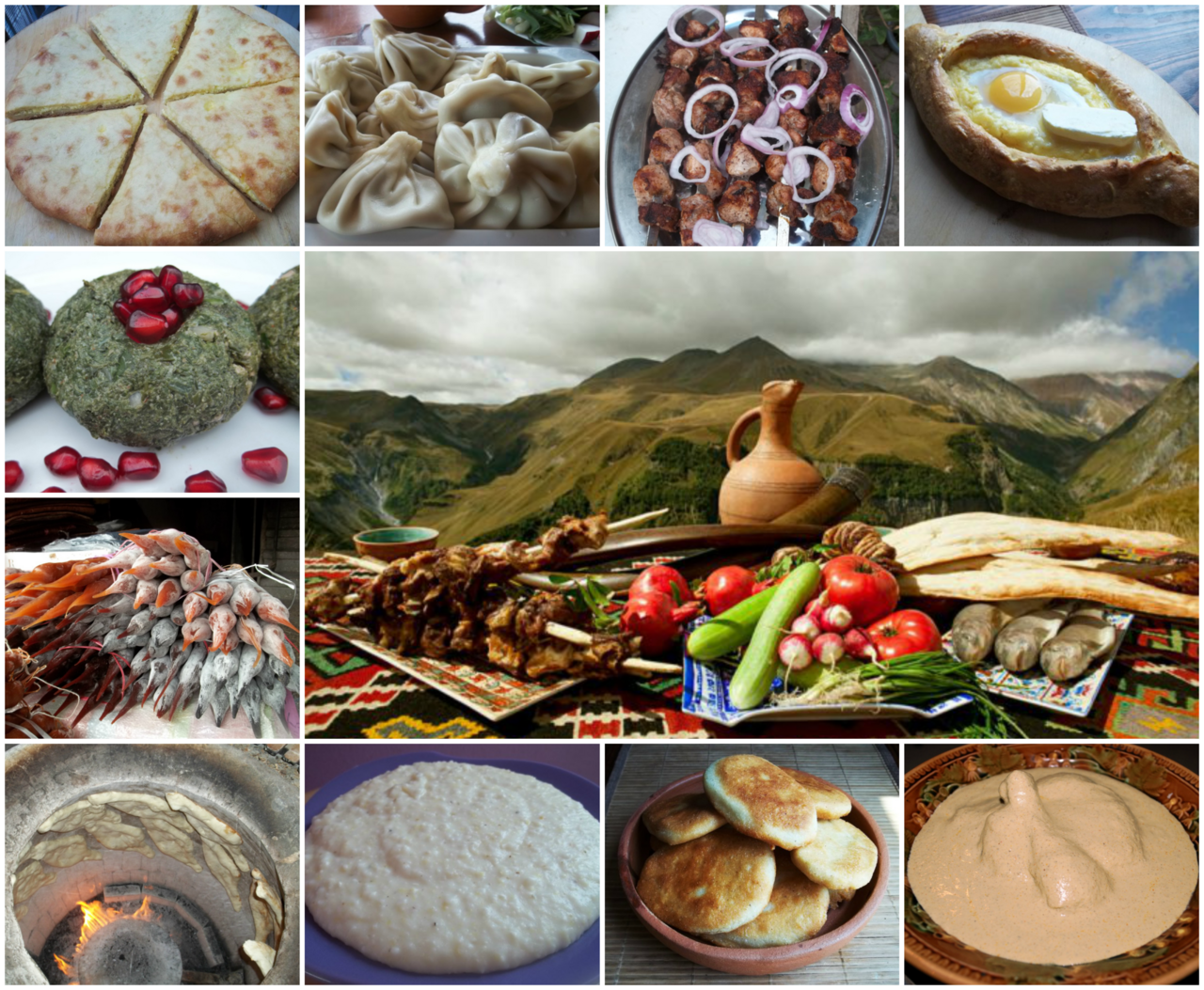
Georgian cuisine is distinguished by its rich history and unique flavors. The most famous Georgian dishes reflect the nation’s culture, traditions, and lifestyle. Different culinary traditions developed over centuries in various regions of Georgia, shaped by climate and geography.
Khachapuri
Khachapuri is considered one of the oldest dishes in Georgian cuisine, possibly dating back to ancient times. A cheese-filled bread similar to Khachapuri first appeared in Colchian culture and may have had ritual significance. The round shape of Imeretian Khachapuri is believed to symbolize the sun or moon.
The famous Adjarian Khachapuri is said to have been first baked by a Laz fisherman, and its boat-like shape quickly became a popular breakfast among fishermen. Today, Georgia even has a “Khachapuri Index,” inspired by The Economist’s “Big Mac Index,” to measure economic conditions based on the cost of baking Khachapuri.
Khinkali
Very little is historically known about Khinkali. According to legend, it originated in one of Georgia’s mountainous regions. Originally, it was made only with lamb and beef and was mainly food for shepherds and hunters. Khinkali was practical because it stayed fresh in cold conditions, was easy to transport, and highly nutritious.
Mtsvadi
Mtsvadi (Georgian barbecue) is probably the oldest Georgian dish. Traditionally, it was grilled on skewers made from grapevine branches, giving it a distinctive aroma. Today, Mtsvadi can be made with meat, fish, or vegetables, though pork Mtsvadi remains the most traditional version.
Lobiani
Unlike Khachapuri, Lobiani is a much younger dish and likely dates back to the late Middle Ages. Beans became widely cultivated in western Georgia from the 16th century onward, and Lobiani quickly became a popular meat alternative during fasting periods. Different regions later developed their own variations.
Eggplant with Walnuts
Eggplants likely spread to Georgia in the 12th–13th centuries from Persia or Arab countries. The walnut-filled fried eggplant dish probably originated in Kakheti around the 16th century and was often prepared for celebrations and fasting periods because of the labor-intensive preparation process.
Satsivi
Historians believe Satsivi originated in western Georgia, especially in Imereti or Guria, regions famous for walnut-based dishes. Originally prepared only for aristocratic feasts because of its expensive ingredients, Satsivi became especially popular during the 19th century and eventually became a staple New Year’s dish.
Ghomi and Elarji
Ghomi originally referred to an ancient grain cultivated in Georgia since the Neolithic era. Over centuries it transformed into the modern cornmeal-based dish known today. Elarji developed when soft cheese began being mixed into Ghomi. Both dishes remain important parts of Samegrelo’s culinary identity.
Chakapuli
Chakapuli is a seasonal dish usually prepared from late April to mid-June. It is especially popular in eastern Georgia and believed to have originated in Kakheti. Traditionally it is made with lamb or veal, green plums, herbs, and spices cooked together in clay pots.